How to track macros without weighing everything
You can track macros without a food scale and still get numbers worth steering by. Here is how to estimate protein, carbs and fat from hand portions and household measures, and where a measuring spoon still earns its place.
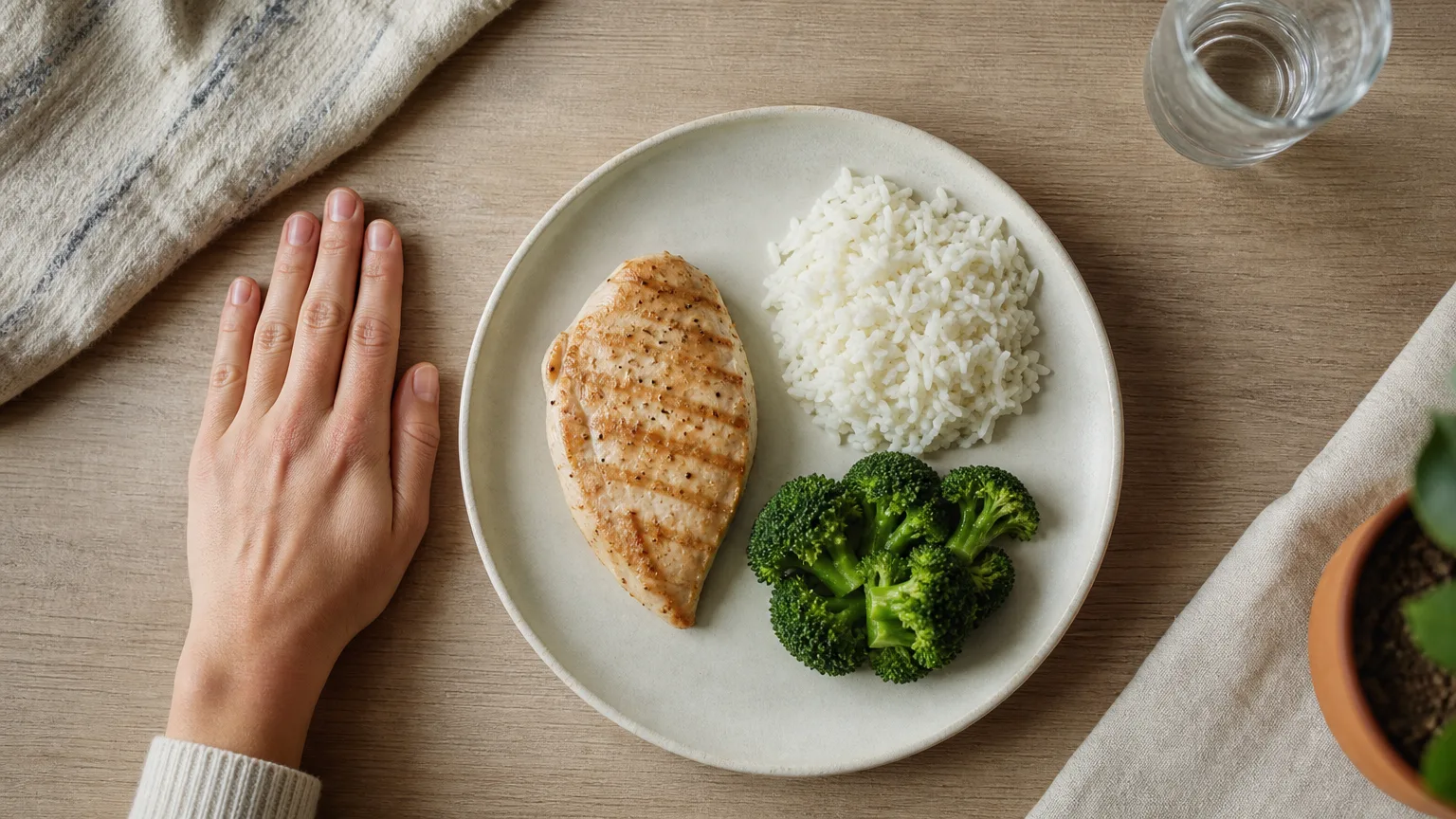
- You need consistency more than precision. An estimate that is off by a similar amount every day still shows you the weekly trend.
- Scan anything with a label, estimate whole foods with hand portions, and measure oil, nut butter and dressing with a spoon.
- Save the meals you repeat, so a good estimate is made once and reused.
Be precise where it matters, approximate everywhere else
Most macro errors come from a few foods: oils, sauces, nut butters and large portions of starch. Spend your attention there and relax about the rest.
Scan what has a label
Packaged foods carry their own numbers. A barcode scan takes a second and removes the guesswork from cereal, yogurt, bread, bars and drinks. Then adjust the serving to what you actually ate: if you poured about two servings of cereal, log two. Reading the Nutrition Facts label explains how servings multiply every number.
Anchor whole foods to your hand
A palm of cooked chicken or fish is roughly 25 to 30 grams of protein. A cupped hand of cooked rice or pasta is about 20 to 30 grams of carbs. A thumb of butter, cheese or nut butter is roughly 7 to 12 grams of fat. Log in the same words: a palm of chicken, two cupped hands of rice, a thumb of butter.
Save and repeat
Once a meal is estimated well, save it. The second, third and fiftieth time it takes one tap, and the estimate stays consistent, which is what makes the weekly average trustworthy.
How do you track macros without a food scale?
To track macros without a food scale, scan packaged foods, estimate whole foods with hand portions or household measures, and measure only the calorie-dense extras, like oil and nut butter, with a spoon. Save the meals you repeat, then judge your progress on the weekly average rather than any single day.
This works because most of what you eat either has a label or is forgiving to estimate. The errors that matter come from a short list of foods, and you can treat those differently without weighing everything else.
If you need exact numbers for a specific goal, such as preparing for a competition, a scale is still the most precise tool. For everyday weight loss or maintenance, good estimates are enough.
Where macro estimates actually go wrong
Whole foods are more forgiving than people think. Misjudging cooked chicken breast by an ounce changes protein by about 8 or 9 grams and calories by about 45. Misjudging olive oil by one tablespoon changes fat by about 14 grams and calories by about 120.
So spend your attention on dense foods, where a small misjudgment carries a lot of calories. Our guide to hidden calories in oils, sauces and drinks covers the usual suspects in detail.
- Cooking oil and butter: measure with a spoon, every time.
- Nut butter: a heaped spoon is often two level tablespoons, close to 200 calories.
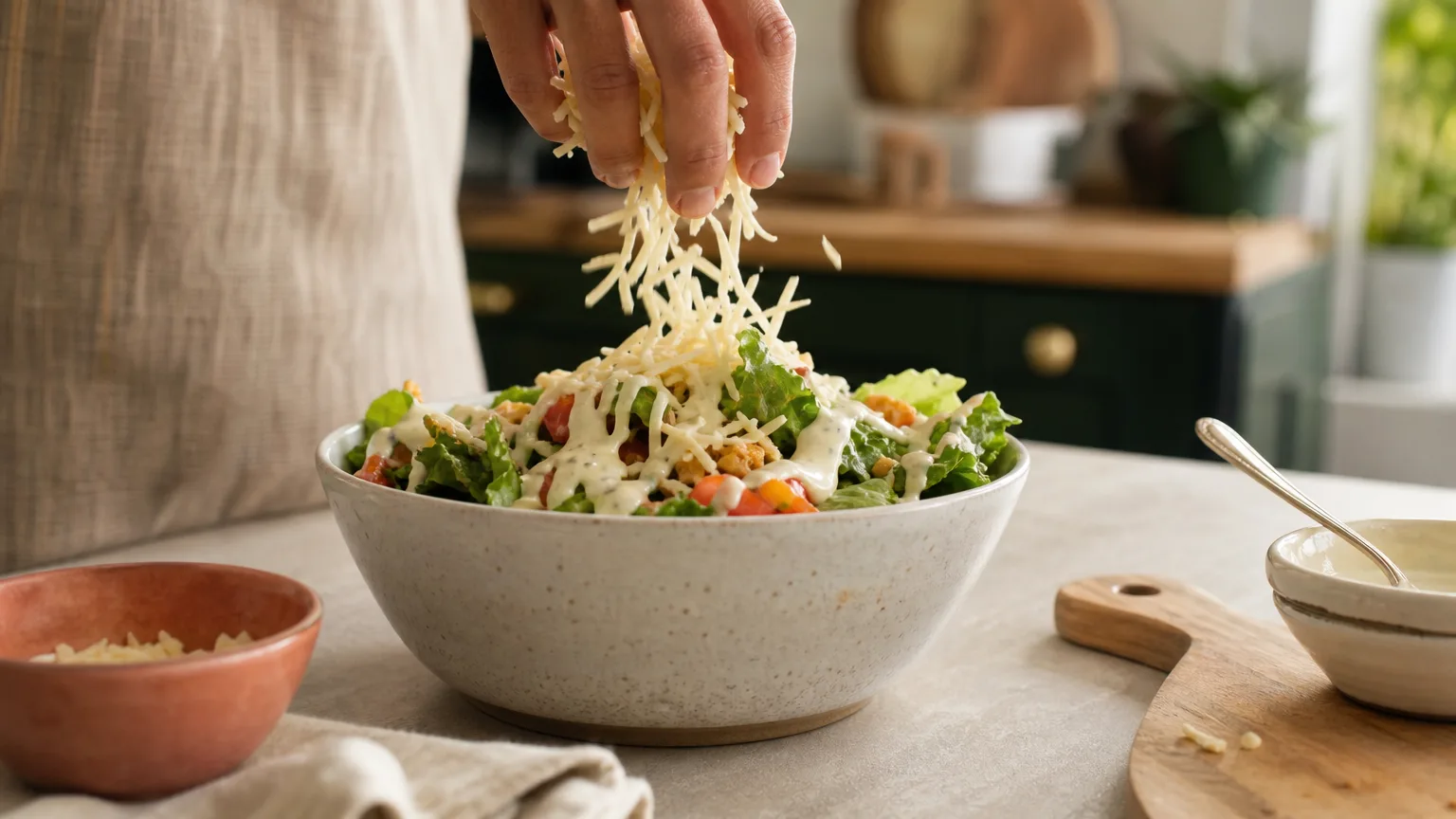
- Salad dressing and creamy sauces: 2 tablespoons is a common serving, and a free pour is often double.
- Cheese and nuts: easy to add by the handful, so count the handfuls.
- Big bowls of rice, pasta and cereal: bowls vary, so calibrate yours once.
A hand portion guide for protein, carbs and fat
Hand portions are not exact, but they scale roughly with body size and they are always with you. These ranges are for cooked food and a typical adult hand.
- Palm (width and thickness, no fingers) of cooked chicken, fish or lean meat: about 3 to 4 ounces, roughly 25 to 30 g protein. A palm of tofu is closer to 10 to 13 g.
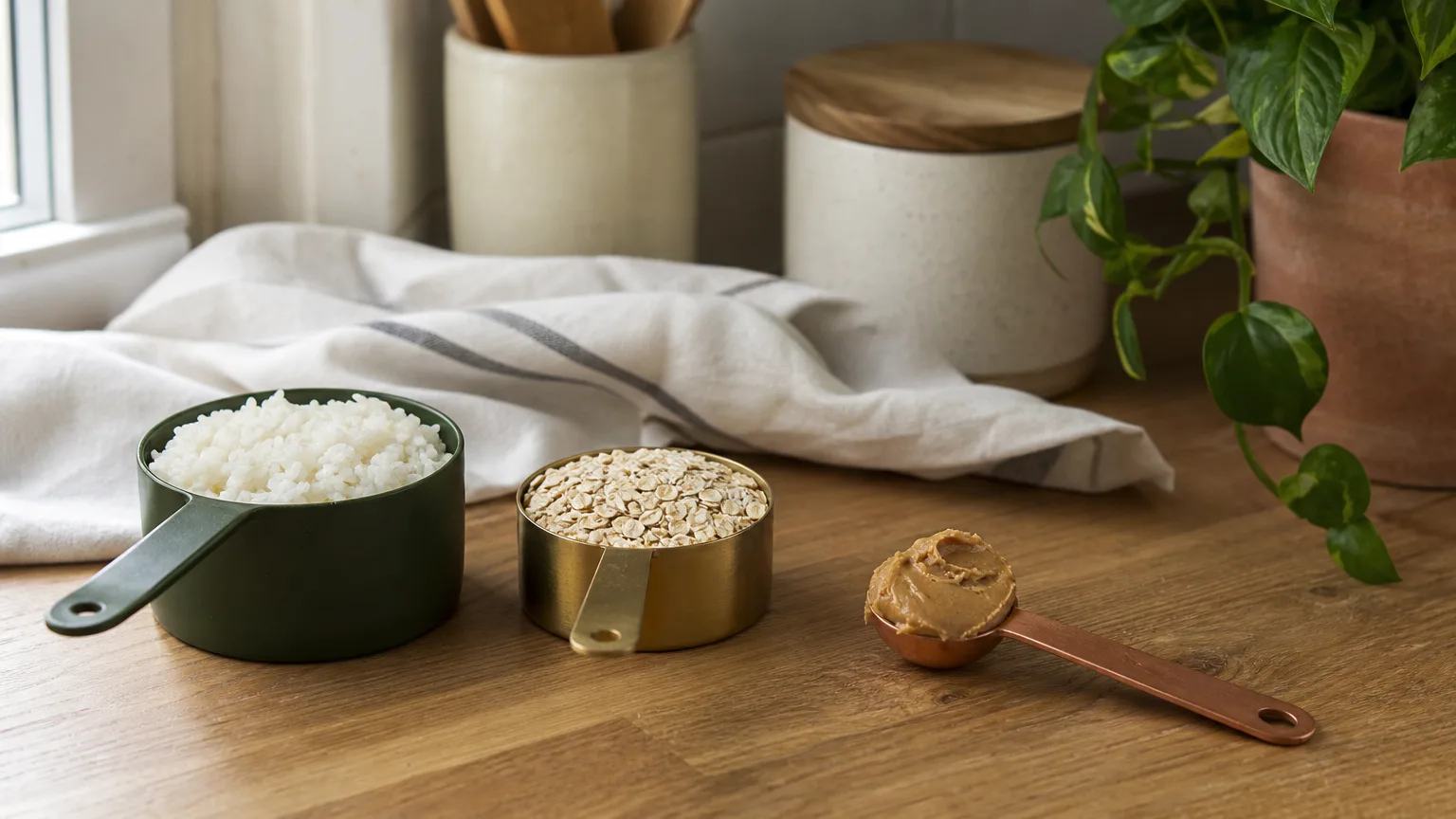
- Cupped hand of cooked rice, pasta, oats, potatoes or beans: about 1/2 cup, roughly 20 to 30 g carbs.
- Fist of fruit: about 1 cup, roughly 15 to 25 g carbs.
- Fist of non-starchy vegetables: about 1 cup, roughly 5 to 10 g carbs.
- Thumb of butter, cheese or nut butter: about 1 tablespoon, roughly 7 to 12 g fat.
- Thumb of oil: about 1 tablespoon, 14 g fat and 120 calories, which is why oil is worth measuring.
Household measures that replace a scale
Hands work anywhere. At home, a few everyday objects and measuring tools are more consistent, and calibrating them once turns every future meal into a quick estimate.
- Deck of cards: about 3 ounces of cooked meat or fish.
- Baseball: about 1 cup of cereal, pasta, fruit or vegetables.
- Ping-pong ball: about 2 tablespoons of nut butter.
- Your usual bowl and mug: fill each once with water from a measuring cup and note where 1 cup and 2 cups sit.
- Measuring cups and spoons: no scale, but real numbers. Use them for the week you set up your saved meals, then go back to estimating.
Worked example: estimating a plate by hand
Say dinner is a palm of grilled chicken breast, two cupped hands of white rice, a fist of broccoli and a thumb of butter on the rice. Here is how the estimate adds up.
- Palm of chicken, about 3.5 ounces: about 30 g protein and 4 g fat.
- Two cupped hands of rice, about 1 cup cooked: about 45 g carbs and 4 g protein.
- Fist of broccoli: about 8 g carbs and 3 g protein.
- Thumb of butter: about 11 g fat.
- Total: about 37 g protein, 53 g carbs and 15 g fat, or roughly 500 calories.
Is it accurate to track macros without a food scale?
Accurate enough for most goals. Individual estimates will be off, sometimes by a fair margin. What matters is that the errors are similar from day to day, so your weekly averages move in the right direction and your weight trend tells you whether the numbers are working.
Reviews of self-monitoring find a consistent link between regular logging and weight loss. Consistency is the part you control, and it is easier to keep up when logging is quick. Photo logging follows the same logic; see how accurate AI photo calorie tracking is and when to correct it.
Once a month, check your usual portions with measuring cups. If your hand estimates have drifted, recalibrate and carry on.
What to do with mixed dishes and restaurant meals
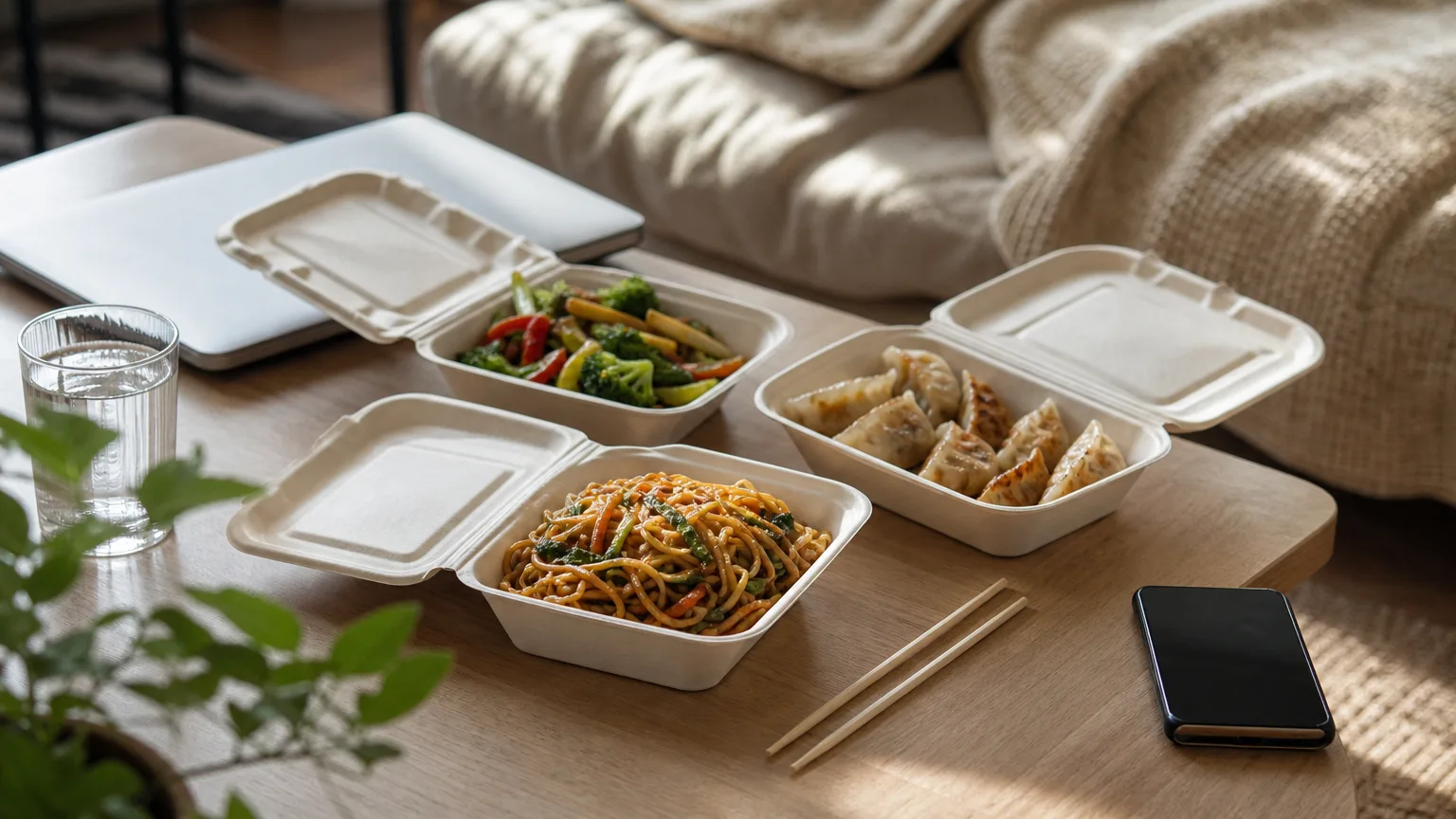
Casseroles, stir-fries and takeout do not break down neatly into palms and fists. Estimate the main parts you can see, then add a line for the cooking fat or sauce you cannot. At restaurants, assume more oil than you would use at home; our guide to tracking calories when eating out has the details.
For dishes you cook yourself, skip estimating entirely: log the recipe once from its ingredients, as explained in counting calories in homemade meals.
Judge the week, not the meal
Daily macros bounce around with plans and appetite. The weekly average is the number that predicts results. If protein averages under your daily protein target, add a palm of protein to breakfast or lunch. If fat runs high, look at oils and dressings first.
In BiteTracker, you can describe a plate in a sentence using the same hand portions, snap a photo and review the suggested portions, or scan a barcode, then watch the macro bars fill. The weekly report shows your average protein, carbs and fat, which is the check that matters.
Frequently asked questions
How do I measure food portions without a scale?
Use measuring cups and spoons at home, and hand portions when you are out. A palm of cooked meat is about 3 to 4 ounces, a cupped hand of rice about half a cup, a fist about a cup, and a thumb about a tablespoon. Calibrate your usual bowl once with a measuring cup.
How many grams of protein are in a palm of chicken?
A palm-sized portion of cooked chicken breast, about 3 to 4 ounces, has roughly 25 to 30 grams of protein. Thighs carry a little less protein and more fat. Larger hands mean larger palms, which is part of why hand portions scale with body size.
Do I need a food scale to lose weight?
No. Many people lose weight using labels, hand portions and measuring spoons. A scale helps if your progress stalls and you want to check your estimates, or if you eat a lot of calorie-dense foods like nuts, granola and cheese. Using one for a week or two can also sharpen your eye.
Should I log food cooked or raw if I don't weigh it?
Log it as cooked. Hand portions and household measures describe food as it sits on your plate, so choose cooked entries in your food database, such as cooked rice rather than dry rice, and cooked chicken rather than raw. Mixing raw entries with cooked portions is a common source of error.
Log protein, carbs and fat the fast way in BiteTracker
Describe a meal in a sentence, snap a photo, scan a barcode or re-add a saved meal, then let the macro bars show where the day stands.
Sources
- Self-monitoring in weight loss: a systematic review of the literature, Burke LE et al., Journal of the American Dietetic Association, 2011
- Steps for Losing Weight, Centers for Disease Control and Prevention
- FoodData Central, U.S. Department of Agriculture
This article is general information, not medical advice. If you have a health condition, talk to your doctor or a registered dietitian before changing how you eat.